
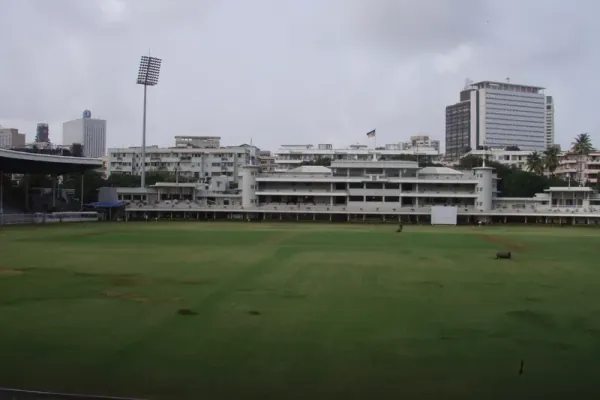
Brabourne Stadium
Get the latest pitch report, T20 records, average first innings score, and live cricket score updates for Brabourne Stadium.
Brabourne Stadium in Mumbai, Maharashtra, is one of the oldest and most prestigious cricket venues in India, established in 1937 and owned by the Cricket Club of India (CCI). With a capacity of 50,000, the ground hosted Test cricket for over three decades before Wankhede Stadium was built and remains a venue steeped in cricketing history. Known for its classic red-brick pavilion, traditional English-style architecture, and slow, low pitches that favour spinners, Brabourne is often referred to as the Lord's of Indian cricket. The stadium continues to host domestic first-class matches, women's internationals, and prestigious corporate events, preserving the heritage of Mumbai cricket.
The Brabourne Stadium is an international cricket stadium in Mumbai in Western India, built in the British Bombay era. It is the home ground of the Mumbai men's and women's cricket teams. It can accommodate 50,000 people for sports matches. The ground is owned by the Cricket Club of India (CCI). The North Stand of the Brabourne had housed the Board of Control for Cricket in India (BCCI) headquarters and the 1983 Cricket World Cup trophy until 2006, when both were moved to the newly built Cricket Centre at the nearby Wankhede Stadium.
The Brabourne Stadium hosted test matches from 1948 to 1972 and it was the venue for Bombay Pentangular matches from 1937 until 1946. After disputes over ticketing arrangements with the CCI, the Bombay Cricket Association (BCA) built the larger Wankhede Stadium north of Brabourne. It was no longer used for tests, although visiting teams played a few first-class matches at the ground. Apart from cricket, the ground has also played host to tennis and association football matches, as well as music shows and concerts.
In the 21st century, international cricket has returned to the Brabourne; it played host to the ICC Champions Trophy in 2006 and was the venue for the first Twenty20 International played in India in 2007. Brabourne hosted a test match in December 2009 after 36 years, thus creating a record for the longest time gap between two tests at the same ground. The ground was home of Mumbai Indians. The opening, Super Six and final matches of the ICC Women's Cricket World Cup 2013 were held here. At its AGM in September 2013, the BCCI unanimously decided to allot international matches as per its rotation policy, reviving the ground as a regular international venue. BCCI used this stadium on 29 May 2014 for the IPL playoff match between Mumbai Indians and Chennai Super Kings. In the 2015 IPL season, the venue was secondary home of Rajasthan Royals.
If you've ever tried navigating Mumbai on a match day, you know exactly what the hype is about. The Mumbai Cricket Association runs this place. Sure, big stadiums can feel a bit soulless sometimes. Not here. They've kept the stands feeling surprisingly tight to the boundary. You actually feel like you're hovering right over the fielders. Just grab your seat early because the food queues get ridiculous once the toss happens.
The curators love rolling out a rock-solid red soil wicket. Forget massive turn on day one. This is a place where you have to grind out your runs. Bowlers have to bend their backs to get any real bounce. It's a tactical nightmare for touring captains trying to figure out field placements, because once a batter is set, the ball just flies off the square.
You honestly can't prep for the noise. With 50,000 people screaming their lungs out, you can't even hear yourself think. The locals don't just wait for boundaries to cheer. They go wild for a solid forward defense. They cheer tight singles. That kind of cricket IQ changes the game. It makes the home side feel ten feet tall and puts touring sides under brutal pressure from ball one.
Under the lights, the ball does some really weird things here. It skids on. Fast. Batters who are slow on their feet get trapped LBW all the time during that twilight period. It's those tiny little local quirks that the data analysts obsess over, but the locals just know it purely from watching years of cricket from the bleachers.
It used to be a nightmare getting a ticket and finding your seat, but they've actually modernized things a lot lately. Scanning in takes seconds now. You grab a drink, find your spot, and just soak it in. It's the perfect mix of chaotic cricket passion and actual modern convenience. Hard to find a better day out.
| Match Type | First Match | Winner | Pitch Type | Active |
|---|---|---|---|---|
| International | India vs West Indies, Dec 9-13, 1948 | Draw | Red Soil | Yes |